
Short version: there are about 18 interior design styles worth knowing, and most real homes are not one pure style but a lean. The most popular for actual American homes is transitional, a balanced blend of traditional and modern, because it's livable and doesn't date. Below: what defines each style, how to spot the differences, and how to find the one that's already yours.
Most people cannot name their design style, and that's fine. You do not need a label to have good taste. But knowing the broad styles helps you say what you want out loud, and it stops you from buying pieces that quietly fight each other. Here is the field, defined simply, with the markers that separate one look from the next.
Why knowing your style matters
A style is just a consistent set of choices: line, color, material, and how much you layer. When those choices agree, a room feels intentional. When they don't, it feels off even when every individual piece is nice on its own.
Knowing your lean is what keeps a room coherent when you shop one piece at a time. It tells you which sofa, which lighting, which palette belong together, so a chair you buy in March still works with a rug you find in September. It is also the fastest way to stop wasting money on pretty things that never quite fit. You don't need to commit to a single pure style. You need to know your base and your tilt, and the rest gets easier.
The 18 styles, defined
Here's the quick tour: where each style comes from, the traits that give it away, and how you'd actually pull it off at home. Read them the way you'd flip through a lookbook, and mark the ones that make you lean in.
Modern
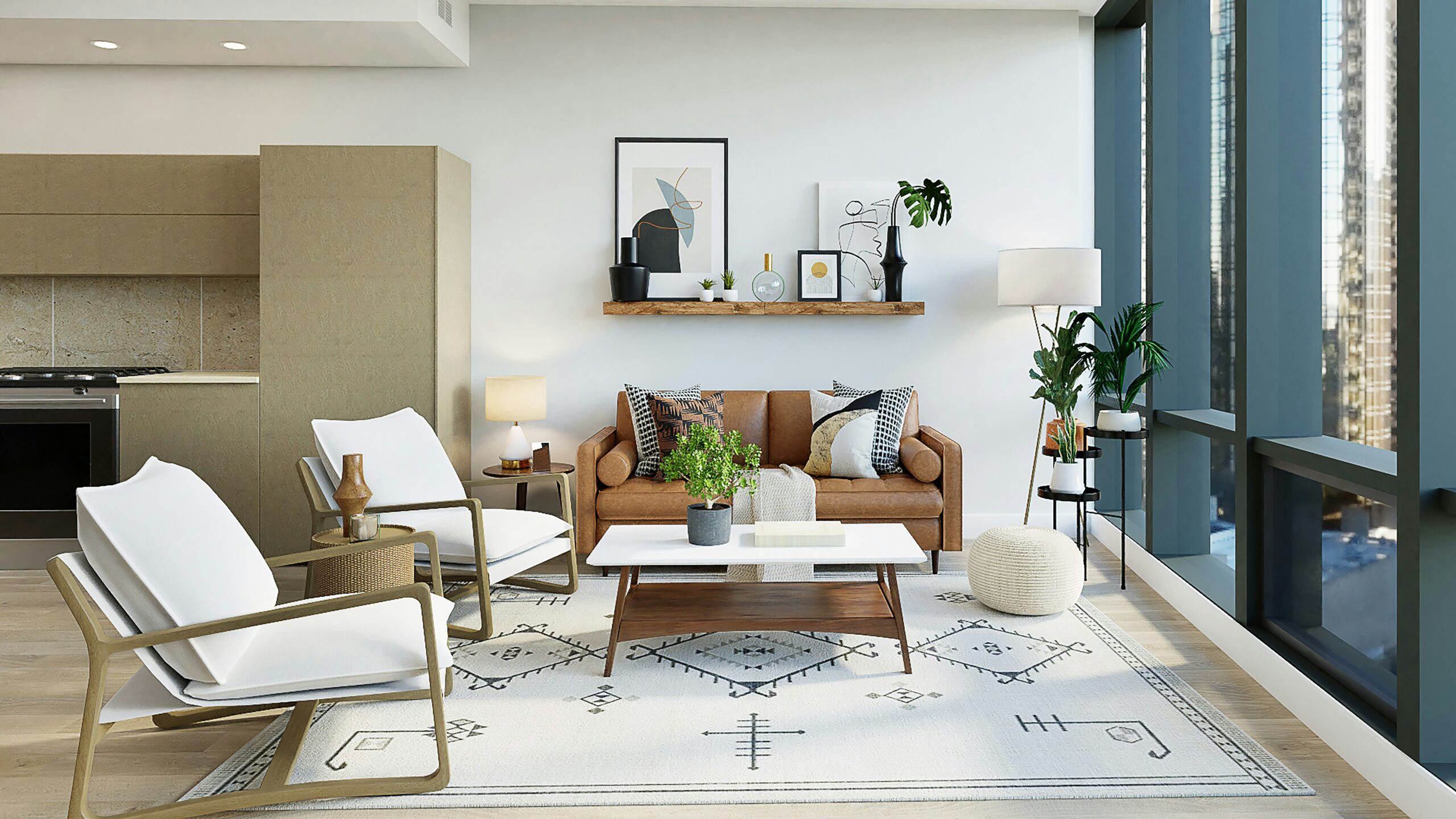
Born from the mid-20th-century design movement, modern is a specific historical look, not just "new." Think clean straight lines, low uncluttered profiles, warm woods, and a neutral palette with almost no ornament. It feels calm and function-first. Strip the fussy details. A low-slung sofa, a spare palette, one honest wood tone, and you read modern fast.

Contemporary
Contemporary means whatever is current right now, so it shifts over time. Today it leans soft-minimal: gentle curves, warm neutrals, organic materials like boucle and plaster, and one quiet statement piece per room. Keep the envelope calm and let a single of-the-moment shape, a curved chair or a sculptural lamp, carry the whole room. The trap here is chasing every trend at once, which just dates the space faster. The contemporary guide covers why it isn't the same as modern.

Transitional
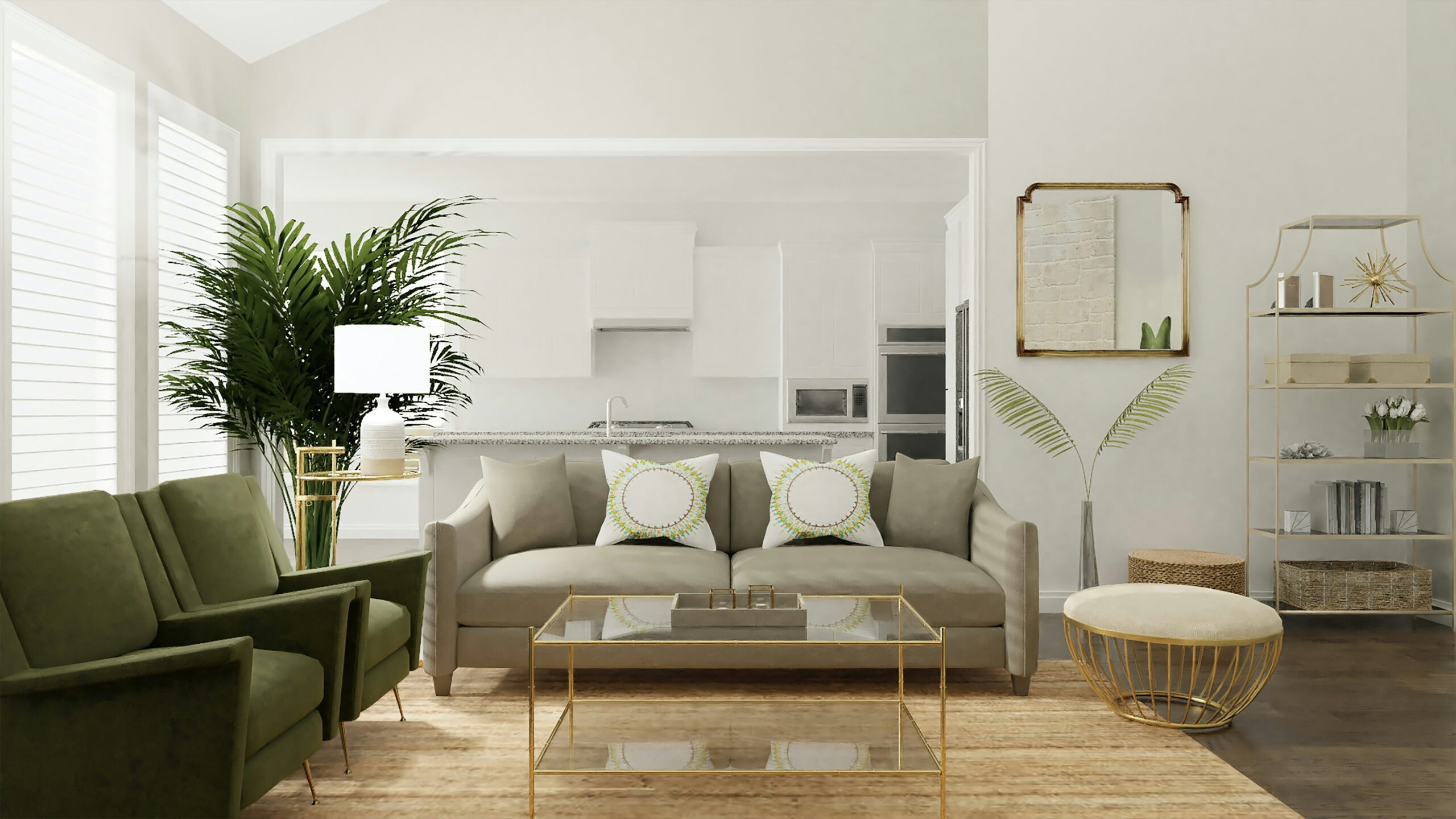
Transitional grew out of designers splitting the difference between traditional and modern, and it's now the most popular look for real American homes. Familiar shapes, clean lines, a calm neutral palette, not too formal and not too stark. The move is a classic silhouette in a modern finish: a rolled-arm sofa in flat oatmeal linen, simple lighting, pattern kept on a leash. See the full transitional guide for the whole method.
Traditional
Rooted in 18th and 19th-century European decor, traditional is classic and formal. Rich dark woods, strong symmetry, layered textiles, and antique-leaning pieces with real ornament. It's timeless and warm, and sometimes a touch formal for how people actually live now. Work in matched pairs, lamps, chairs, nightstands, then slip in one genuinely old piece so the room doesn't read like a furniture showroom. The traditional guide shows how to keep it timeless, not dated.

Modern Farmhouse
Modern farmhouse took the American country look and cleaned it up for current homes. Warm whites, natural wood, matte black accents, shiplap, and a relaxed family-friendly feel. It got badly overdone a few years back, so lean light on the shiplap. Anchor with warm white walls, one raw wood surface, black hardware, and textiles you can throw in the wash. The full breakdown lives in the modern farmhouse guide.

Mid-Century Modern
A revival of 1950s and 60s design, mid-century modern reads warm and optimistic. Tapered legs, organic curves, walnut tones, and bold-but-warm color like mustard, olive, and burnt orange. Start with one walnut piece on peg legs, then add a single saturated accent so the room feels retro, not brown. The mid-century modern guide shows how to use it without the movie-set look.

Scandinavian
From the Nordic countries and their long dark winters, Scandinavian design is light, airy, and functional. Pale woods, white walls, soft layered textiles, and a cozy minimalism the Danes call hygge. Blond wood over dark, walls kept light, then wool throws and sheepskin piled on so the spare palette never turns cold. The Scandinavian guide covers the hygge balance in full.

Minimalist
Minimalism grew from modern and Japanese design, distilled to its quietest form. Spare, calm, disciplined, with a tight neutral palette and negative space treated as the point rather than a gap to fill. Edit hard. Every piece earns its place, storage swallows the clutter, and one considered object gets room to breathe. The minimalist guide shows how to keep it warm instead of cold.

Bohemian (Boho)
Boho draws on global, artistic, and free-spirited living, and it looks collected over time on purpose. Warm earthy tones, layered global textiles, rattan and macrame, plants everywhere, and a happily eclectic mix. The version people get wrong is buying a boho "set" all at once, which kills the collected-over-time feel. Layer rugs and textiles in warm tones, mix a few cultures and eras, and add greenery until the room feels alive. The bohemian guide goes deeper.

Coastal
Coastal borrows from breezy seaside homes without tipping into literal seashells. Soft blues and sandy neutrals, lots of natural light, linen and jute, and an easy vacation-at-home calm. Skip the anchors-and-starfish decor, add natural fibers instead. Hold the palette to sand and water tones and let windows stay light and uncovered where you can. The coastal guide keeps it grown-up, minus the kitsch.

Industrial
Industrial style came out of old factories reworked into city lofts. Exposed brick, black metal, concrete, and reclaimed wood, with a moody open feel and honest raw materials. Leave the structure showing where you can. Matte black metal, one weathered wood surface, a palette that stays gray, black, and rust. The industrial guide shows how to keep it warm, not cold.

Rustic
Rustic style leans on rugged, natural, unfinished materials pulled straight from the outdoors. Raw wood with visible grain, stone, exposed beams, and an earthy warm palette that feels grounded and handmade. Chunky solid wood over anything sleek, finishes matte and natural, and a little roughness left in the texture on purpose.

Eclectic
Eclectic isn't the absence of a style, it's a deliberate, considered mix held together by a designer's eye. Pieces from different eras and origins, bold pattern and color, and unexpected pairings that still share a thread. The secret is the thread. Pick one unifying element, a repeated color or a consistent frame finish, then mix freely around it so the room reads intentional instead of cluttered.

Mediterranean
Drawn from Spain, Italy, and Greece, Mediterranean style feels sun-warmed and handmade. Terracotta and warm plaster walls, arched openings, wrought iron, patterned tile, and earthy blues and ochres. Start with the walls: textured plaster or warm white. Then terracotta, one patterned tile moment, and dark wood and iron in place of anything sleek.

French Country
French country comes from the rustic provincial homes of southern France, softer and more romantic than formal French decor. Soft muted colors, distressed and painted wood, toile and gingham, curved carved furniture, and a lived-in elegance. One painted or gently distressed wood piece, soft blues and buttery creams around it, a delicate toile to finish. The French country guide shows how to keep it romantic, not fussy.

Hollywood Glam
Also called Hollywood Regency, this style traces back to 1930s film-star interiors. High contrast, plush velvet, mirrored and lacquered surfaces, brass and gold, and a bold jewel-toned palette. A little goes a long way here. One glossy or mirrored surface, velvet upholstery, and metallics plus a deep saturated color doing all the drama.
Shabby Chic
Shabby chic emerged in the 1980s as a softer, feminine take on vintage cottage style. Distressed painted furniture, soft pastels and whites, floral prints, ruffles, and antique pieces worn to a gentle patina. Paint a wood piece soft white and sand the edges back, layer in florals and linen, keep everything light, faded, and romantic.

Japandi
Japandi is a recent hybrid of Japanese minimalism and Scandinavian warmth, and it's one of the fastest-rising styles right now. Low clean-lined furniture, natural wood, a muted earthy palette, and handmade imperfect objects in the spirit of wabi-sabi. Keep the room low and spare. Mix light Scandinavian wood with darker Japanese tones, and pick a few handmade pieces over a shelf of perfect ones. The Japandi guide goes deep on wabi-sabi and how to land the balance.

How to find your style
You almost certainly already have one, you just haven't named it yet. Three quick ways to surface it:
- Audit what you save. Pull up the images you've pinned or screenshotted and look for the pattern. Clean lines or soft curves? Warm or cool tones? Spare or layered? The repetition is your lean.
- Notice where you feel calm. The hotels, friends' homes, or rooms that make you exhale, what do they share? That feeling is more reliable than any label.
- Pick a base and a tilt. Most people are transitional at the base with a tilt toward warm (farmhouse, boho, Mediterranean) or toward modern (mid-century, minimal, Japandi). Naming the tilt is usually enough to make confident choices.
If you want a faster read, run this short checklist and note which side you land on more often:
- Straight clean lines, or soft curves and carved detail?
- Cool grays and whites, or warm creams and woods?
- Spare and edited, or layered and collected?
- Matte and raw materials, or polished and glossy?
- One quiet palette, or bold color and pattern?
Lean left down that list and you're pointing at modern, minimal, or Scandinavian. Lean right and you're closer to traditional, boho, or glam. Land in the middle, which most people do, and you're transitional with a tilt. And if none of this clicks, that's normal. Plenty of people only recognize their style when a designer reflects it back to them.
Can't pin down your style? That's exactly what a Fresh Eyes Visit does. Julia reads what you're drawn to and translates it into a concrete plan for your actual room. 90 minutes, a written plan in 48 hours, one room, $350 to $500, across Montgomery County and Greater Philadelphia.
Can you mix styles?
Yes, and almost every well-designed home does. The trick is a common thread, so the mix reads intentional rather than accidental. Keep a consistent palette, repeat a material or two, or hold a shared level of formality across the room. Transitional is itself a deliberate mix of traditional and modern, which is proof that blending with discipline often beats committing to one pure look.
The failure mode is mixing with no thread at all. That's the moment a room tips from collected into just busy, and it's usually why a space full of nice pieces still feels unresolved. Pick two styles at most, decide which one leads, and let the other play a supporting role.
Around Greater Philadelphia, the mixes we help clients pull off most often are transitional leaning modern-farmhouse in older suburban homes, and mid-century warmed with a little boho in newer builds. Both work because they share a palette and a level of formality. Whatever you lean toward, the goal is the same: a home that feels like a coherent, intentional version of you.
Style deep-dives
- What is transitional interior design? (the most popular, and the most livable)
- Modern farmhouse interior design explained
- Bohemian (boho) interior design explained
- Japandi interior design (Japanese calm meets Scandi warmth)
- Minimalist interior design (the warm kind, not the cold kind)
- Scandinavian interior design explained
- Mid-century modern interior design explained
- Coastal interior design (without the seashells)
- Contemporary interior design (and why it isn't modern)
- Industrial interior design (warmed into a home)
- Traditional interior design (classic, not dated)
- Organic modern interior design (warm, curvy, natural)
- French country interior design (Provencal warmth)