Bespoke, full-service design built around how your family truly lives, resolved down to the stone, the millwork, and the light, from concept to white-glove install.
Luxury interior design is full-service, bespoke design built around how a family actually lives, resolved down to the quality of the materials and the craft. It is deeply considered, not just expensive. JG Interior Design provides full-service luxury design across Greater Philadelphia and the Main Line, from concept through white-glove install.
Which room is bugging you?
The finishing work that turns a just-renovated house into a finished home: the furniture, layout, lighting and styling planned around the space you built, on a budget that respects what you already spent.
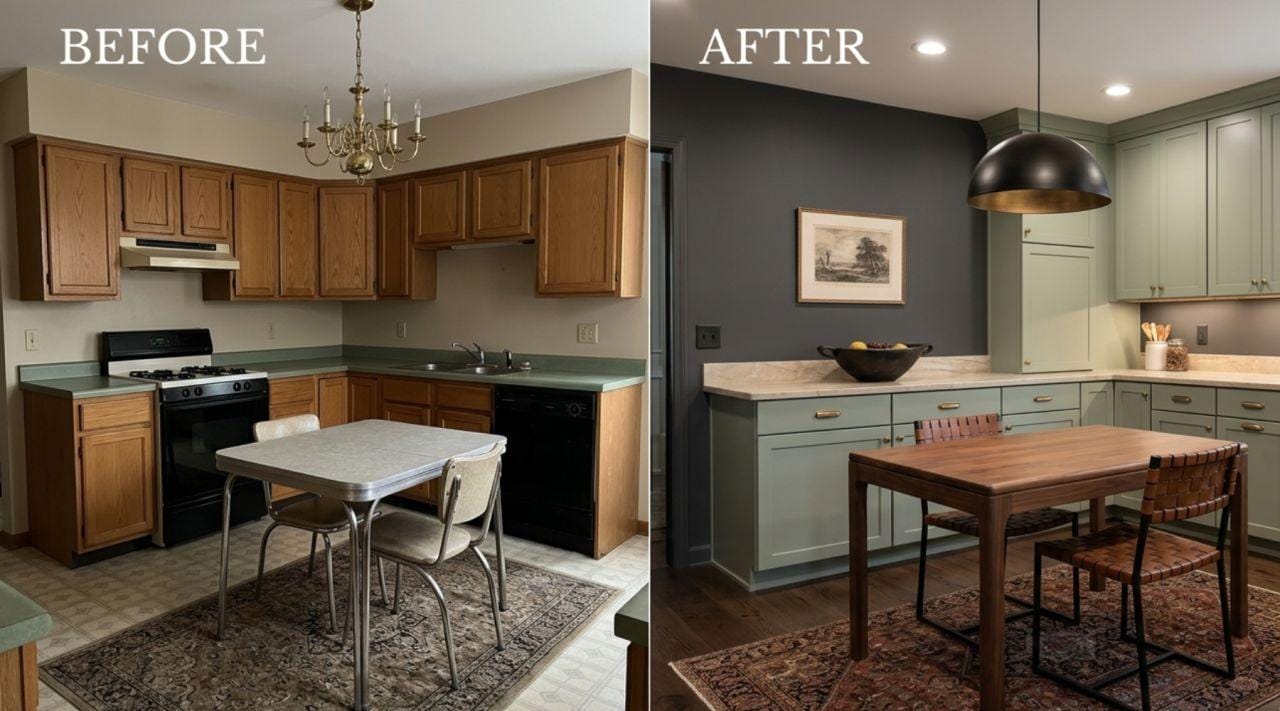
The design layer of the kitchen: layout and flow, cabinetry color and finish, countertops, lighting and hardware, worked out alongside your contractor or cabinet maker.
Layout and flow, tile and materials, vanity and finish, lighting, fixtures and hardware, drawn up to work together. Julia designs the room and works with your contractor or tile setter to build it.
Color, furniture, window treatments, rugs, art and the styling that makes a room feel finished, working with the space as it is rather than moving walls.
A 90-minute walkthrough, room by room, that ends in a written plan of exactly what to change before you list: what to keep, remove, repair, move, or light differently, in priority order.
Julia walks your home, listens to how you live in it, and gives you a clear plan for fixing what is not working: a written, prioritized plan within 48 hours.
One room, 90 minutes in your home, a written plan in 48 hours, $350 to $500. Still not sure? Score your home in 2 minutes.
The word luxury gets attached to anything with a high price tag. The homes that really have it feel considered the moment you walk in: nothing fights, the proportions are right, and the light falls the way it should.
The builder handed over a new house with good bones, and the interior is still waiting for someone to finish it properly.
A stone estate added to over the years that needs a steady hand so the old and the new read as one house.
A house filled with expensive things that photographs well and still feels thin, because buying is not designing.
A luxury interior that ignores how the people in it live is just an expensive mistake with good lighting.
Luxury interior design is bespoke, full-service design built around how you actually live, with every detail resolved before anything is installed. The distinction that matters is not the budget. It is the depth of thought. A luxury project starts with how a family truly uses a home, who cooks, who hosts, how the house needs to feel on an ordinary Tuesday and on the night it holds thirty guests. The design answers those questions first, and the beautiful part follows from the answers rather than being imposed on top of them.
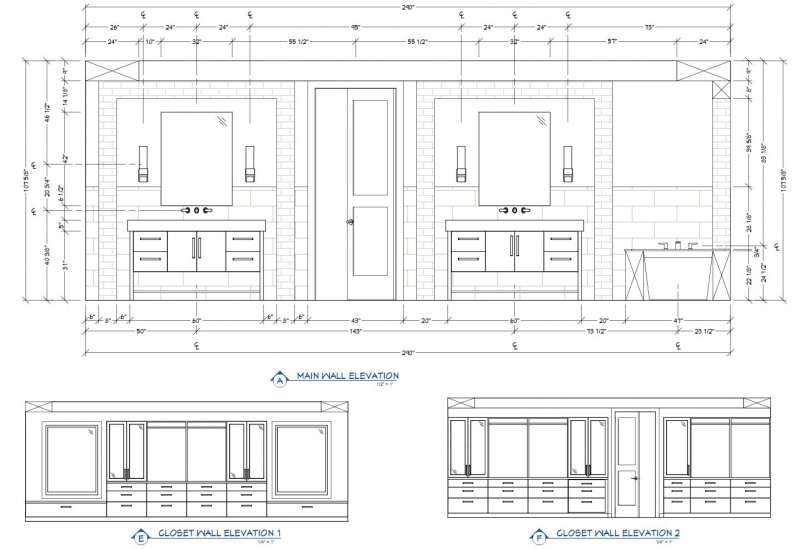
From there it is about quality and craft. Hand-selected natural materials rather than whatever the showroom is pushing. Custom pieces made to the room instead of bought to fill it. Millwork drawn for the specific wall it will live on. Lighting planned as carefully as the furniture. A luxury room reads as calm and inevitable because every element was chosen for that room and resolved against every other one. That resolution, the absence of anything accidental, is what luxury actually is.
The difference is whether the decisions were made together, by someone holding the whole house in their head, or one at a time by whoever happened to be selling. Luxury design is the first kind, the discipline of making hundreds of decisions cohere into one quiet, confident result.
Julia carries the project so you make decisions about the vision and very few about logistics.
Not every client needs all of it. Some want Julia to run the whole house. Others already have an architect and builder and need her for the interior layer and the sourcing. Either way, the money goes where it earns its keep: the slab you touch every day, the sofa you will own for twenty years, the lighting that makes the room work.
Luxury is not a style Julia applies. It is a level of care, carried all the way to the last drawing and the last slab selected by hand.
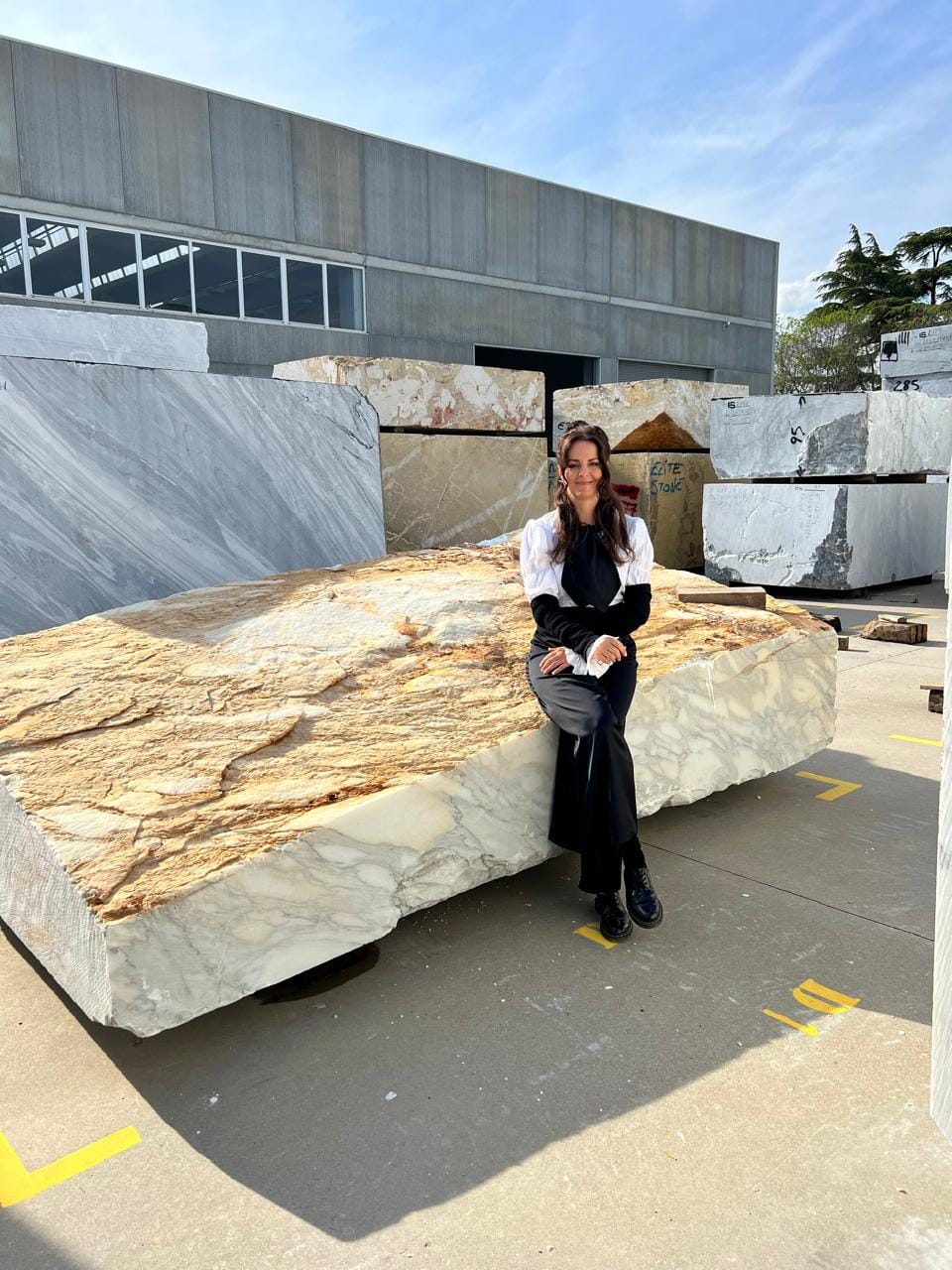
Hand-selecting stone at the yard
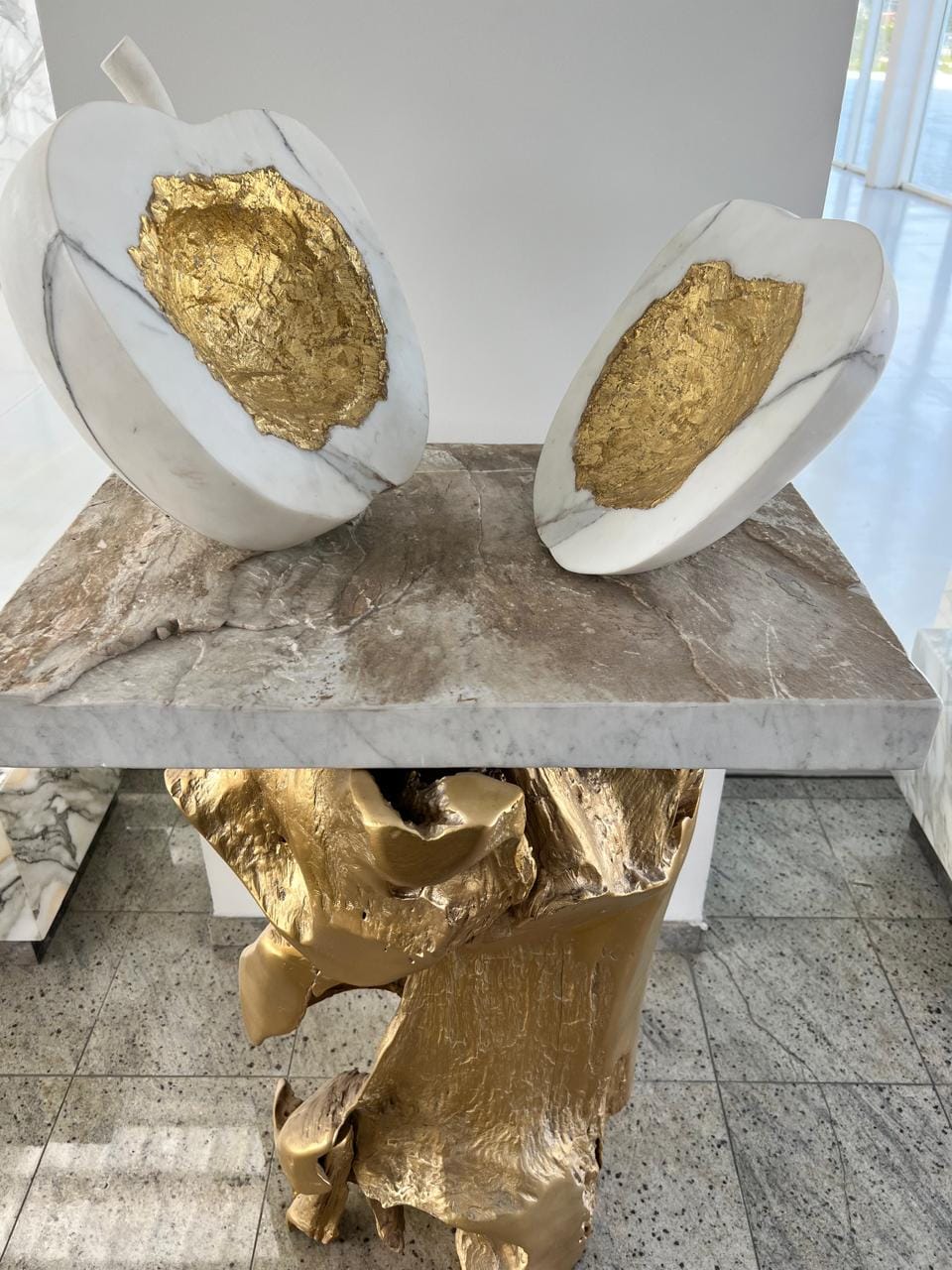
A one-of-a-kind stone piece
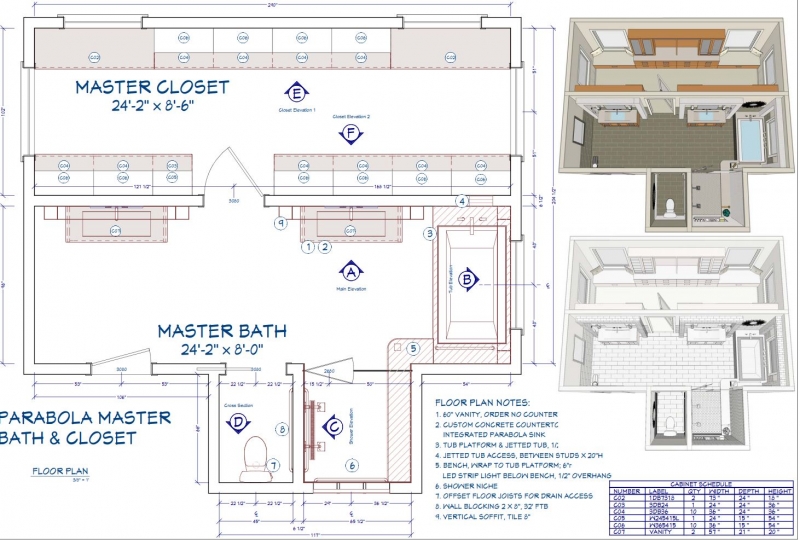
Space planned to the inch
Every room starts as a drawing
“Julia walked in and immediately saw what I couldn't after staring at the rooms for weeks. Her recommendations were specific, practical, and made the space feel completely different.”John Miller · More client stories
Julia's approach to a luxury home starts with listening, not sketching. She wants to understand the family before she understands the floor plan, because a luxury interior that does not fit the people in it is just an expensive mistake with good lighting.
The homes she works in across Greater Philadelphia tend to have history or ambition, often both. Stone estates on the Main Line that have been added to over a century and need a steady hand to make the old and new read as one house. Georgian and Tudor homes where the architecture deserves honesty rather than a trendy overlay. New luxury builds in Villanova, Radnor and Gladwyne where the builder handed over a beautiful empty shell. Each asks for a different hand, and twenty-six years is mostly what teaches you which one to use.
The through-line is restraint. A luxury home does not need to announce itself. It needs to be right. Julia's work tends toward rooms that are warm, layered and quietly expensive rather than loud, spaces that look better in person than in photographs because the quality lives in the materials and the proportion.
Full-service means Julia carries the project from the first idea to the last cushion placed, so you make decisions about the vision and very few about logistics. On a luxury project that scope usually includes:
The overall vision for the home, how it should feel, how the rooms relate, the palette and the materials that carry through from one space to the next.
How each room works, where walls or openings should move, how furniture and traffic and light actually flow. This is the structural thinking the beautiful part depends on.
Furniture, built-ins and cabinetry designed for your rooms and made by trusted makers, rather than assembled from a showroom floor.
Choosing slabs in person, matching grain and movement, specifying the woods, metals and textiles that age well and feel honest under the hand.
Managing orders, lead times, deliveries and the hundred moving parts a luxury project involves, so you never have to chase a vendor.
Everything delivered, placed, styled and finished in one coordinated install, so you walk into a home that is fully done rather than a project in pieces.
There is a version of high-end interiors that is really just high-end shopping. Someone with taste and a generous budget fills a house with expensive, beautiful things. The result can photograph well and still feel thin, because buying is not designing. A room assembled from individually gorgeous purchases often has no center and no logic holding it together.
Luxury design is the opposite discipline. The furniture, the finishes and the art are chosen in service of a plan, and the plan is built on how the home is actually lived in. The money goes where it earns its keep, into the slab you touch every day, the sofa you will own for twenty years, the lighting that makes the whole room work, and it is held back where spending more would add nothing. That judgment, knowing where to invest and where to stop, is the part a shopping trip cannot give you.
Luxury interior design suits people who care about getting the home right and would rather make the big decisions once, well, than manage a long string of small ones themselves. Often they have done a renovation or a build and learned that finishing an interior to a high standard is a full profession, not a weekend of showroom visits.
The homes tend to be significant. Stone and brick estates on the Main Line. Georgian, Tudor and Colonial houses across Montgomery and Bucks County with architecture worth honoring. New luxury construction in Gladwyne, Villanova and Radnor where the shell is finished and the interior is waiting. City residences in Philadelphia where every decision counts. What the clients share is not a specific budget. It is the intention to live in a home that feels fully, quietly resolved.
The houses change a lot from the Main Line to Bucks County to South Jersey, and so does the work.
What Philadelphia's wealthiest families built along the old Pennsylvania Railroad is still standing, a lot of it set back behind hedges and stone walls. Stone manors and Tudor-revival estates, many from the Gilded Age, sit next to grand Colonial Revivals with deep baseboards and coffered ceilings. Julia lets a stone fireplace or a Wissahickon schist wall set the palette instead of fighting it. Tall windows get treatments that frame the light, never smother it.
Some of the oldest housing in the Philadelphia suburbs, and the widest range. Stone colonials and Tudors in Blue Bell and Fort Washington. Mid-century houses on wooded lots. High-end new construction on bigger parcels than almost anywhere in the region. No single imported look fits all of that, so each house is designed from what it already has, and a big new room gets furniture, rugs and lighting planned to its real dimensions so it never feels sparse.
Area pages: Montgomery County, Blue Bell, Huntingdon Valley
William Penn built Pennsbury Manor here. The farmers who came after left fieldstone farmhouses, bank barns and mill buildings, plenty of them from the 1700s. Low beamed ceilings are what make those rooms feel intimate, so lighting and furniture are scaled to the height and the room feels warm rather than pressed down. Wide-plank floors keep their patina. The luxury new builds get the same thinking in reverse: borrow some age and craft so the house does not look like it arrived last year.
Area pages: Bucks County, Doylestown, New Hope, Newtown
Fieldstone farmhouses and early colonials with deep sills and hand-hewn beams. Country estates on real acreage around Kennett Square and Chadds Ford. Barns and springhouses that have been added onto more than once. Here the architecture leads. Putting a trend on a house with two centuries of history is the quickest way to make an expensive interior feel wrong, so placement, rug size and lighting are fitted to each room as it actually is.
Area pages: West Chester, Kennett Square, Chadds Ford
Just across the Delaware, a historic borough and a brand new subdivision can be ten minutes apart, and that range is the whole job. Haddonfield and Moorestown have center-hall colonials with deep trim and rooms of real scale. Cherry Hill, Voorhees and Marlton lean toward larger builds with height and open sightlines, where the work is giving all that volume a center. Stone, solid wood and real textiles that get better with use, in both.
Area pages: South Jersey, Haddonfield, Moorestown
City houses and condo residences, where old bones, historic rules and tight footprints shape almost every decision. A luxury project in a building with a board and a freight elevator runs differently from one in a Main Line estate. Philadelphia has its own full page.
A luxury project runs in phases, each one closing before the next opens, so nothing gets bought or built before it has been thought through.
Most clients begin with a Fresh Eyes Visit, a low-commitment way to put Julia in the home and see how she thinks before committing to a full engagement. She walks the house, listens, and names what the rooms need and in what order. For a smaller scope, that visit and the plan that follows may be all you need. Read more on the interior design consultation page.
For a full engagement, the next phase is concept and space planning. Julia develops the direction for the home, resolves the layout room by room, and brings back drawings, materials and a clear vision before a single thing is ordered. This is the phase that protects the budget, because changes on paper cost nothing and changes on site cost everything.
Once the plan is approved, Julia sources the pieces, commissions the custom work, selects the stone and materials by hand, and coordinates with your builder and trades so the design is carried out as drawn. You approve the decisions that matter and she manages the rest.
The project ends with a coordinated white-glove install. Rather than furniture trickling in over months, everything arrives, gets placed and styled, and the home is revealed finished. It is the difference between living in a construction zone for a year and walking into a home that is done.
Nothing gets bought or built before it has been thought through.
A Fresh Eyes Visit puts Julia in the home so you can see how she thinks before committing. For a smaller scope, it may be all you need.
Direction for the home, the layout resolved room by room, and drawings and materials before a single thing is ordered. Changes on paper cost nothing.
Custom work commissioned, stone selected by hand, trades coordinated, then a white-glove install and a home revealed finished.
If you are earlier in the process, an interior design consultation is the place to start. If your home came out of a recent renovation, post-renovation interior design covers that case specifically.
Rather talk first? Call (267) 789-1428 or send Julia a question.
Start with a free 30-minute call
| Service | Cost range | Notes |
|---|---|---|
| Fresh Eyes Visit (walkthrough + written plan) | $350 to $500 | Low-commitment start |
| Last 20% Package (design, sourcing, ordering, install; furniture separate) | typically $1,500 to $5,000 per room | Fixed scope, quoted after the visit |
| Larger and whole-home luxury projects | Quoted after the visit | Scoped room by room |
The design fee buys the thinking and the furnishings buy the home, and on a luxury project the furnishings are usually the larger number by far. For a fuller breakdown, see what an interior designer costs.
Clients would rather make the big decisions once, well, than manage a long string of small ones. What they share is not a budget. It is the intention to live in a home that feels fully, quietly resolved.
Homes added to over a century, where the work is making old and new read as one house.
Across Montgomery and Bucks County, with architecture that deserves honesty rather than a trendy overlay.
Builds in Gladwyne, Villanova, and Radnor where the shell is finished. Coming in while the architecture is underway is the ideal time to plan lighting, built-ins, and materials.
Philadelphia homes where every decision counts and there is no room for anything accidental.
Estate towns
Areas served

Julia Ginzburg has spent twenty-six years in some of the most significant homes in Greater Philadelphia and along the Main Line, from stone estates to Georgian and Tudor houses to new luxury builds. She works from her studio in Huntingdon Valley.
Her approach starts with listening, not sketching, and the through-line is restraint: rooms that are warm, layered, and quietly expensive rather than loud. More about Julia
Luxury interior design is bespoke, full-service design built around how a family actually lives, resolved down to the materials and the craft. It handles concept, space planning, custom pieces, lighting, sourcing and install. The mark of it is depth of thought, not price alone.
It depends on scope. A Fresh Eyes Visit runs $350 to $500. Julia's Last 20% Package typically runs $1,500 to $5,000 per room, furniture separate. Larger and whole-home luxury projects are quoted after the visit, because the custom work and the furnishings set the number.
Full-service means the project is carried from first concept to final install. It includes the vision and palette, space planning, custom and bespoke pieces, hand-selected materials and stone, lighting design, coordination with your builder and trades, sourcing and procurement, and a white-glove install at the end.
Depth of thought, not the price tag. Expensive is a budget. Luxury is a home where every element was chosen for that room and resolved against every other one, built on how the family truly lives. You can spend a fortune and get a catalog, or design carefully and get something that feels priceless.
Yes. Julia works alongside your architect, builder and trades so the design is carried out as drawn and nothing is lost on site. On new luxury builds she often comes in while the architecture is underway, which is the ideal time to plan lighting, built-ins and materials rather than patch them later.
That is the point. In a Main Line manor, a Bucks County fieldstone farmhouse or a Chester County colonial, the architecture is the asset: the millwork, the stone, the deep sills, the proportions, the light. Julia designs so the furnishings serve those bones instead of fighting them, which is what keeps an older home looking timeless rather than dated or themed.
A big budget makes a plan more valuable, not less. On a large project the mistakes are large too. The wrong sofa is a five-figure wrong sofa. A written plan puts the decisions in order so every purchase lands, and it usually pays for itself the first time it stops one costly misstep.
Greater Philadelphia and the Main Line, including Montgomery County, Bucks County, West Chester and Chester County, Philadelphia, and South Jersey, with deep estate-town work in Gladwyne, Villanova and Radnor. In-home consultations from the Huntingdon Valley studio.
Ninety minutes in your home, a written plan in 48 hours, $350 to $500. If you do not leave with clarity, you do not pay. Serving Greater Philadelphia and the Main Line.